There is something extraordinary about viewing a photograph taken more than a century ago and suddenly seeing it in three dimensions.
The First World War was one of the most extensively photographed conflicts in history. Yet almost all the images we encounter today are reproduced as flat, two-dimensional photographs. What is less widely appreciated is that many photographs of the conflict were originally taken stereoscopically, using two slightly different viewpoints to recreate the impression of depth.
Viewed correctly, these photographs offer a remarkably different experience. Landscapes acquire distance, figures become separated from their surroundings, and scenes that might otherwise appear familiar take on an unexpected sense of presence. For a moment, the distance between the viewer and the events of a century ago seems somehow reduced.
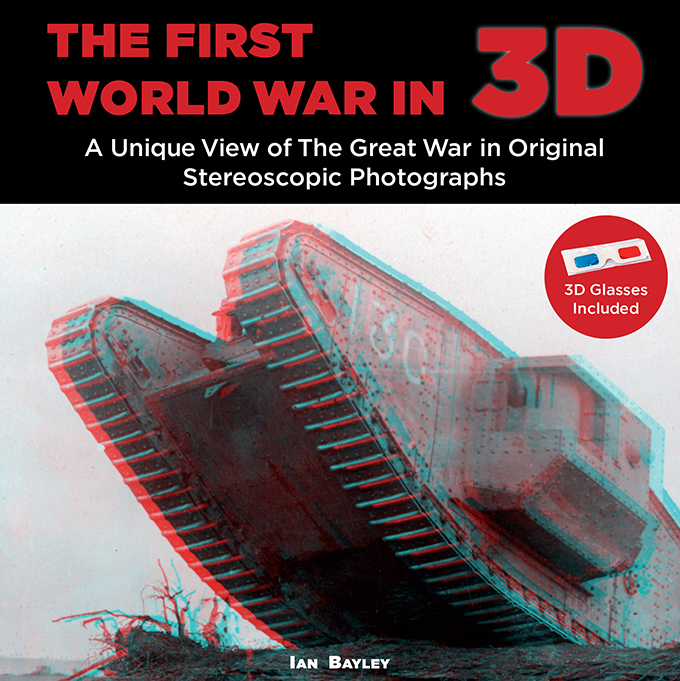
It was my fascination with these images, and my desire to make them accessible to a wider audience, that eventually led me to create The First World War in 3D.
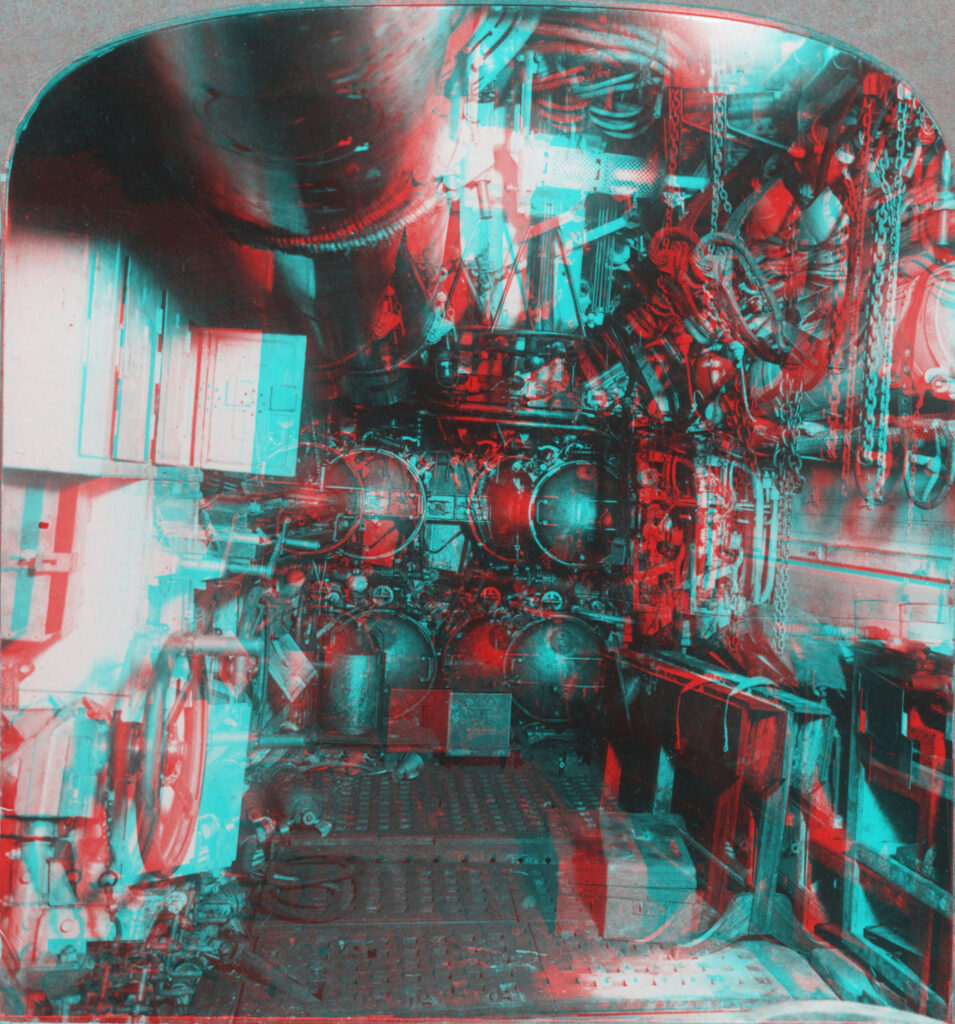
If you have a pair of red/cyan 3D glasses to hand, put them on as you explore the photographs in this article. You’ll discover something that ordinary reproductions of these historic images cannot convey.
A lifelong fascination with three dimensions
My interest in three-dimensional imagery goes back many years. During the 1980s, I was experimenting with and producing holograms, exploring the extraordinary possibilities of images that appeared to occupy real space rather than simply sit on a flat surface.
Alongside this fascination with three-dimensional imagery, I have always had a strong interest in photography and military history. It was perhaps inevitable that these interests would eventually come together in my collecting of historical stereoscopic photographs, particularly those dating from the First World War.
As my collection of original stereocards grew, I became increasingly struck by the remarkable images they contained. Here was a fascinating visual record of the Great War, captured in three dimensions, yet largely overlooked in the way we encounter historical photography today.
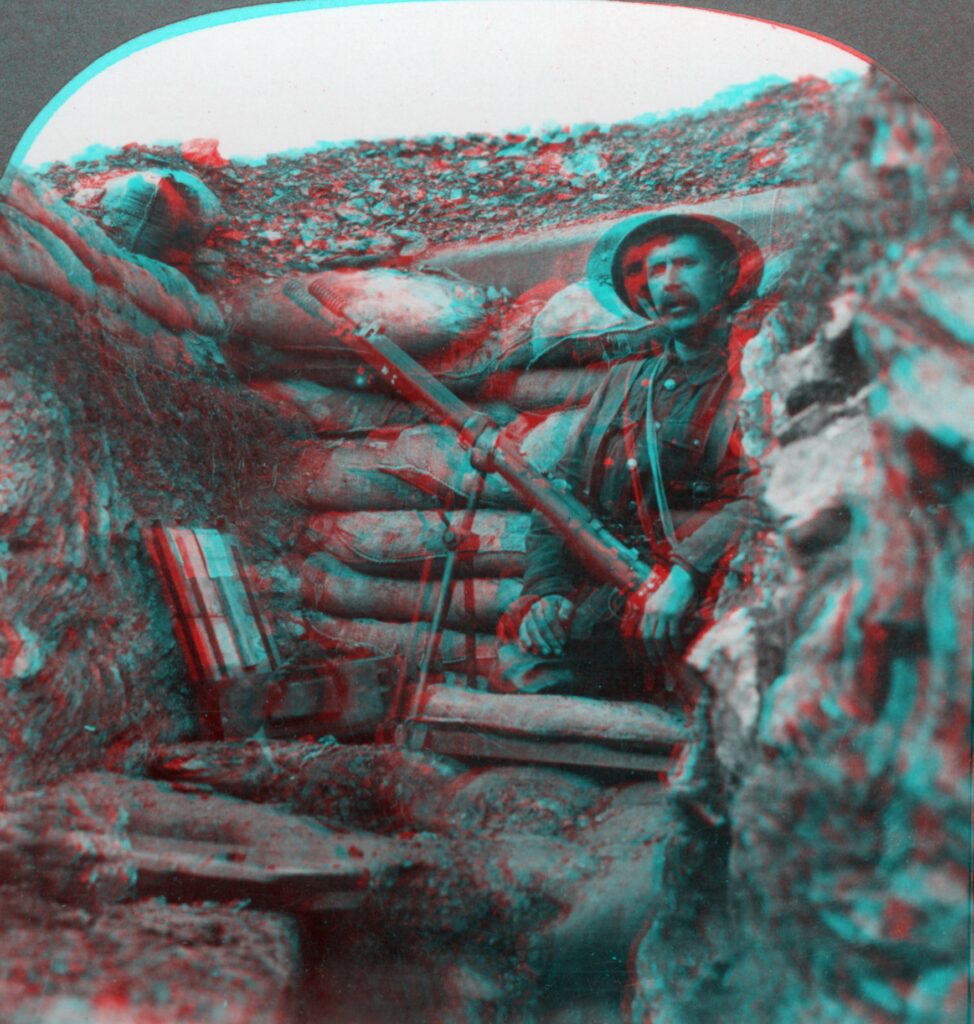
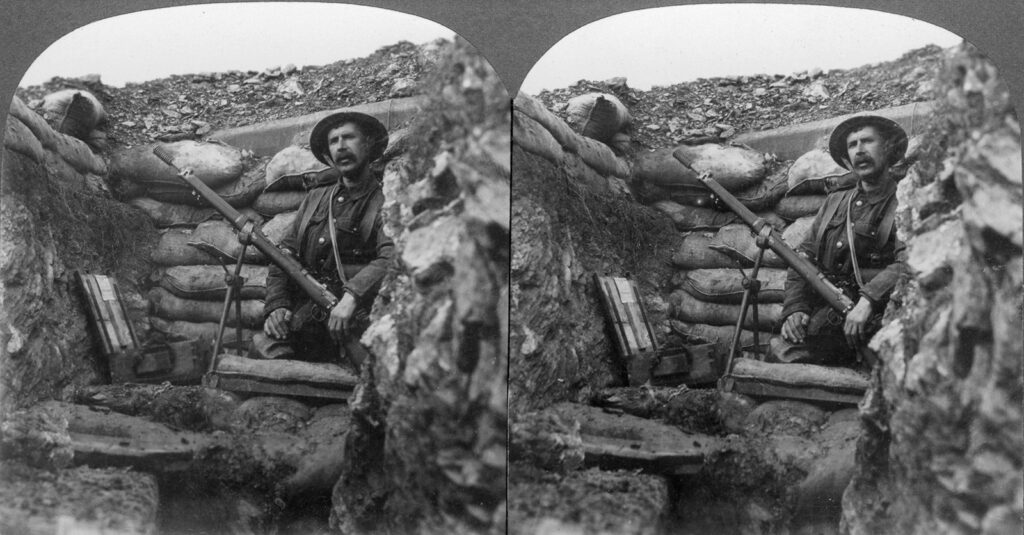
These photographs were not simply historical curiosities. They were created to be experienced in depth, and without that third dimension something important was being lost.
I felt that they deserved to be seen more widely and, importantly, to be viewed as their photographers had intended.
Rediscovering a forgotten dimension
Stereoscopic photography was already well established when war broke out in 1914. The technique had been popular since the Victorian era, allowing people to experience distant places, landscapes and events through specially prepared pairs of photographs.
Using a stereoscopic viewer, each eye sees a slightly different image. The brain combines the two views to create the impression of a single scene with depth, much as we experience the world through our own eyes.
During the First World War, stereoscopic photographs recorded soldiers, military equipment, devastated landscapes and scenes of everyday life. These images allowed people far removed from the conflict to encounter something of the places and events that were shaping their world.
Today, surviving stereocards can be found in collections, archives and occasionally reproduced in books. But they are frequently presented as ordinary photographs, without the means to experience their original three-dimensional effect.
For me, that is rather like listening to a piece of music with half the instruments missing. The subject remains recognisable, but an important part of the original experience has disappeared.
Looking at these photographs in stereo reveals details and spatial relationships that can easily go unnoticed in a flat image. A soldier standing in the foreground becomes distinctly separated from those behind him. A trench acquires a sense of its physical dimensions. The destruction of a building or landscape can become more tangible.
Of course, stereoscopy cannot tell us what those who experienced the war were thinking or feeling. But it can offer a different way of looking at the world they inhabited.
Creating The First World War in 3D
The idea behind the book was straightforward: to bring these remarkable photographs to a wider audience and allow readers to experience them in the way they were originally intended.
Producing it involved personally selecting and researching the historical images, considering not only their subject matter and historical significance but also their effectiveness as stereoscopic photographs.
Some images have a particularly striking sense of depth, while others reveal more subtle spatial relationships. I wanted the selection to reflect the breadth of the photographic record while demonstrating what makes stereoscopy such a distinctive medium.
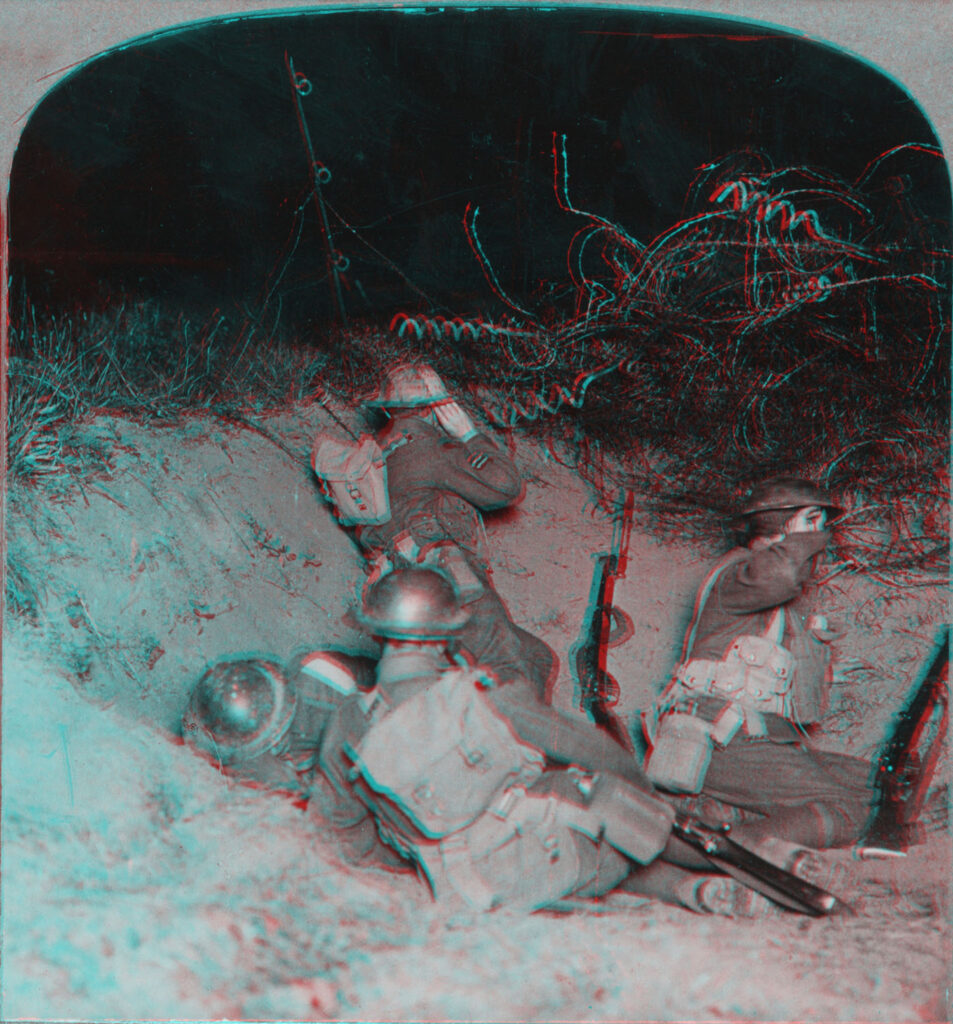
The design of the book was equally important. Rather than simply assembling a collection of historical photographs, I wanted to create something that encouraged readers to spend time with the images, explore their details and appreciate their three-dimensional qualities.
The challenge was to make the experience accessible without requiring readers to own specialist viewing equipment.
The solution was to reproduce the photographs in two different formats.
Two ways of seeing the past
Every photograph in The First World War in 3D is presented as a red/cyan anaglyph, allowing readers to experience the three-dimensional effect using the viewing glasses supplied with the book.
Anaglyphs combine the two stereoscopic views into a single image, using colour separation so that each eye receives a different view through the coloured lenses. It is a simple and effective way of making stereoscopic photographs accessible to almost anyone.
But I also wanted to preserve the photographs in their more traditional form.
The book therefore reproduces the original stereo pairs as well, allowing readers who have a suitable stereoscopic viewer to experience the images in that format.
Presenting both versions was an important decision. It means that someone discovering stereoscopy for the first time can enjoy the photographs immediately, while those with an established interest in the medium can explore them using a traditional viewer.
It also preserves a connection with the original stereocards from which the images were drawn.
More than a historical curiosity
For me, stereoscopic photography has never been simply a technical novelty or a clever visual trick. It offers a genuinely different way of experiencing a photograph.
That is especially powerful when the subject is historical.
We are accustomed to looking at photographs of the First World War as records of a distant past. The uniforms, equipment and landscapes are familiar from countless books, exhibitions and documentaries.
Yet seeing those same scenes in three dimensions can make them unexpectedly immediate. The people in the photographs seem to occupy their own space, rather than being confined to the flat surface of a page.
There is something particularly compelling about that experience. These were real people, standing in real places, photographed at a particular moment in history. Stereoscopy can help us become more aware of the physical world they occupied.
It does not diminish the distance of time or the tragedy of the conflict, but it can encourage us to look more closely and perhaps see familiar subjects in a different way.
That is what continues to fascinate me about stereoscopic photography, whether I am researching historical images or creating new photographic work today.
Experience the photographs for yourself
The First World War in 3D brings together a carefully selected collection of original stereoscopic photographs from the 1914–18 conflict, offering readers a different perspective on the people, places and events of the Great War.
The photographs are presented as red/cyan anaglyphs for viewing with the glasses included in the book, and as original stereo pairs for readers who own a suitable stereoscopic viewer.
My hope was to make this remarkable photographic heritage accessible to people who might never otherwise encounter it, while retaining the qualities that made the original images so fascinating.
For me, the book represents the meeting of three longstanding interests: military history, photography and the extraordinary ability of stereoscopic imagery to change how we see the world.
Discover The First World War in 3D
The First World War in 3D brings together a selection of original stereoscopic photographs, presented as both red/cyan anaglyphs and traditional stereo pairs. Viewing glasses are included with the book.
If you would like to explore these remarkable historical photographs for yourself, you can find out more about the book in my shop.